
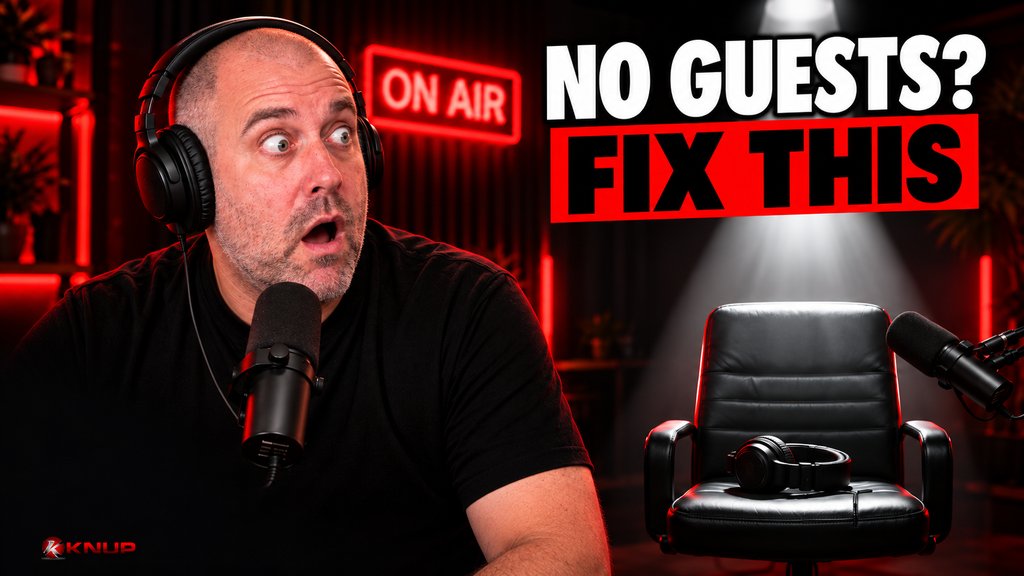
Every new podcaster hits the same wall around episode five. The friends you planned to interview are done. The big names you dreamed about are not answering. And the calendar for next month is empty.
I recorded 245 episodes of the Knup Sports Show from 2020 through 2025, talking with CEOs, founders, and leaders across iGaming and sports business. Guests included Adam Wexler, CEO of PrizePicks; Nigel Eccles, founder of FanDuel; and Paris Smith, former CEO of Pinnacle. That show is retired now, and I am building two new ones on Knup Media, Rewritten and Built, which means I am back to filling guest calendars for brand-new shows.
So this is not theory for me. This is the exact approach I would hand anyone asking how to find podcast guests and get them to say yes.
Get clear on your show before you ask anyone
The fastest way to get ignored is to pitch a show you cannot explain in one sentence.
Before you ask a single guest, write down:
- Who the show is for. Not "everyone who likes business." A real audience.
- What every episode is about. The kind of conversation a guest is walking into.
- What the guest gets. Exposure to a specific audience, a clean clip pack, a page they can share, a good conversation.
The Knup Sports Show was easy to pitch because the lane was obvious: sports business and iGaming leaders talking shop. People in that world understood the value right away. When your lane is clear, guests can say yes without a meeting about your meeting.
If you are still shaping the show itself, start with How to Start a Podcast With a Simple Setup. If you are running more than one show, decide which lane each guest belongs in. I cover that in How to Start Two Podcasts Without Burning Out.
Build a guest list in three tiers
Most people make one list: dream guests. Then they wonder why nobody replies.
Make three lists instead.
- Warm guests. People who already know you. Clients, past coworkers, friends in your industry, people you have met at events, people who have commented on your posts. These are your first episodes.
- Reachable guests. People one step away. Authors with a new book, founders with a new launch, operators who post a lot and clearly like talking about their work, guests on other shows in your niche.
- Stretch guests. The big names. Keep them on the list, but do not build your launch on them.
Aim for 20 to 30 names total before you send anything. A list that size keeps you focused, and it forces you to think about who actually fits instead of who would look cool on the thumbnail.
A simple spreadsheet works. Name, tier, why they fit, how you know them (or who knows them), contact path, status. That is your guest pipeline.
Start with the people who already know you
Warm guests are not a consolation prize. They are how you build the catalog that makes stretch guests say yes later.
A bigger guest will often look at your show before answering. If they see five solid episodes with real people and real conversations, you are a show. If they see one trailer, you are an idea.
This is the same lesson I keep coming back to in business: relationships first. I wrote about it in Why Relationship-First Businesses Beat Transactional Ones, and podcasting is no different. The people who already trust you are the easiest yes, and they often know the next guest.
At the end of every good recording, ask one question: "Who else should I talk to?" Then ask if they would be open to making the intro. That one habit can keep a guest calendar full.
Where to find podcast guests beyond your network
Once your warm list is booked, here are the places I would look next.
- Other podcasts in your niche. If someone was a great guest somewhere else, they are comfortable on a mic and probably open to more. Listen first so you can ask something new.
- LinkedIn and X. Search for people posting thoughtfully about your topic. Someone who writes long posts about their work usually loves talking about it. Engage with their posts for a while before you ask. I cover the long game in How to Grow Your LinkedIn Network.
- Events and conferences. Speaker lists are a guest list someone already vetted for you. And an in-person conversation makes the follow-up email warm instead of cold. See How to Turn Event Conversations Into Actual Clients for the follow-up side.
- New books and launches. Authors and founders with something new to talk about are actively looking for shows.
- Guest matching platforms. Sites like PodMatch and MatchMaker.fm connect hosts with people who want to be guests. They can be useful for volume, but screen hard. Someone pitching every show on the internet is not always someone your audience needs.
- Inbound applications. Put a simple "Be a guest" form on your show page. Ask for their topic, why it fits your audience, links to past interviews, and their social profiles. Then you review, not chase.
Write a pitch that is short and specific
The best guest pitch is short enough to read on a phone and specific enough that it could only have been sent to them.
Here is the shape I like:
- Who you are and the show, in one line. "I host Built, a show about builders, systems, and shipping."
- Why them, specifically. Reference a post, a launch, a talk, or an episode they did. Prove you paid attention.
- The angle. One or two topics you would like to dig into. Guests say yes to a conversation they can picture.
- The commitment. Remote, about 45 minutes, video, a link to pick a time.
- One easy next step. "Open to it?" works better than a paragraph of options.
That is it. No three-paragraph bio. No attachments. No "I know you are busy, but."
A scheduling link from a tool like Calendly removes three emails of back-and-forth. The fewer steps between "sure" and "booked," the more guests actually show up.
Follow up without being annoying
Most yeses come on the follow-up, not the first message. People are busy, emails get buried, and a polite second note is normal.
My rule of thumb: follow up once after about a week, and once more a week or two later with something new, like a recent episode they might like or a fresh angle. If there is still no answer, move them to a "later" column and let it go for a few months. No guilt trips, no "just bumping this to the top of your inbox" three times in a row.
I wrote a full guide on this for sales, and it applies almost word for word to guests: How to Follow Up With Leads Without Being Annoying.
Make it easy for guests to say yes again
Booking a guest is only half the job. The other half is making them glad they did it, so they share the episode and recommend you to others.
- Send a short prep note. Topics, rough flow, recording link, and how long it will take. No surprises.
- Make the tech easy. A guest should click a link, check their mic, and join. I have used StreamYard for interviews because guests understand it fast.
- Be clear about how the episode will be used. Tell guests up front that the conversation will be published as audio, video, and clips. Some hosts also use a written guest release. Buzzsprout has a good breakdown of whether you need podcast guest release forms, and it is worth reading before you decide.
- Send them a share kit. The episode link, a page you own, two or three short clips, and a quote graphic. This is where the clip system from How to Turn One Podcast Episode Into a Week of Clips pays off twice.
- Say thank you. A real one, not an automated email.
When a guest has a great experience, they become your best recruiter. Never get too important to treat guests well. That is a theme I care about in every part of business, and I wrote about it in Never Get Too Important to Build Relationships.
Common mistakes when booking podcast guests
These are the ones I see most often:
- Only chasing big names. Your show grows on good conversations, not just famous ones.
- Pitching before you have episodes. Record a few warm-guest episodes first so there is something to look at.
- Generic copy-paste pitches. If the email could go to anyone, it will be ignored by everyone.
- No system. Guest names in your head and DMs scattered across four apps means people fall through the cracks.
- Booking too far behind. Try to stay a few episodes ahead so one cancellation does not break your schedule.
- Forgetting distribution. If the episode goes out and nobody sees it, guests notice. Distribution is the problem for most shows, and guests care about it too.
A simple weekly guest-booking routine
You do not need a booking agency. You need a small habit you can repeat.
- Add three to five new names to your guest list
- Send three to five personalized pitches
- Send follow-ups that are due
- Ask every guest you record this week for one intro
- Update the status of every name on the list
A small block of time each week for that routine does more than a big outreach push once a quarter.
Final thoughts
Finding podcast guests is not a numbers game. It is a relationship game with a little bit of system behind it.
Start with the people who already know you. Build a short, honest list. Pitch like a human. Follow up politely. And treat every guest so well that they want to send you the next one.
That is how a show goes from an empty calendar to a waiting list.
FAQ
How do I find guests for my podcast when I am just starting out?
Start with your warm network: clients, coworkers, friends in your industry, and people you have met at events. Record a few solid episodes with them, then use those episodes as proof when you reach out to people you do not know yet.
How do I ask someone to be a guest on my podcast?
Send a short, personal message. Say who you are and what the show is about in one line, explain why you picked them specifically, suggest one or two topics, state the time commitment, and include an easy way to book.
How many times should I follow up with a potential podcast guest?
A good default is two follow-ups spaced a week or two apart, each with something useful or new. If there is still no reply, set them aside for a few months instead of pushing harder.
Should I pay podcast guests or charge them to be on my show?
Most interview shows do neither. Guests usually come on for the conversation and the exposure. If money changes hands in either direction, be transparent with your audience about it.
Do podcast guests need to sign a release form?
It depends on your show and your comfort level. Some hosts use a written release for every guest, while others rely on clear communication before recording. Read up on the options and talk to a lawyer if you are unsure.
Start with reliable hosting or build the full system
Buzzsprout is what I am using for Rewritten and Built. If you want help connecting your show, website, content, and automation into one publishing workflow, talk with Built by Knup.